

Why Aren't Term Limits?
They're very popular. They've been talked about forever. So why don't we have them?

Just before the holiday weekend, a post from the Democratic-boosting Erfan Media account “DemzDeliver” announced that the Texas Senate candidate James Talarico was proposing that if he were elected, he would put up a bill to limit how long members of Congress could serve.
The post got 2.5 million views.
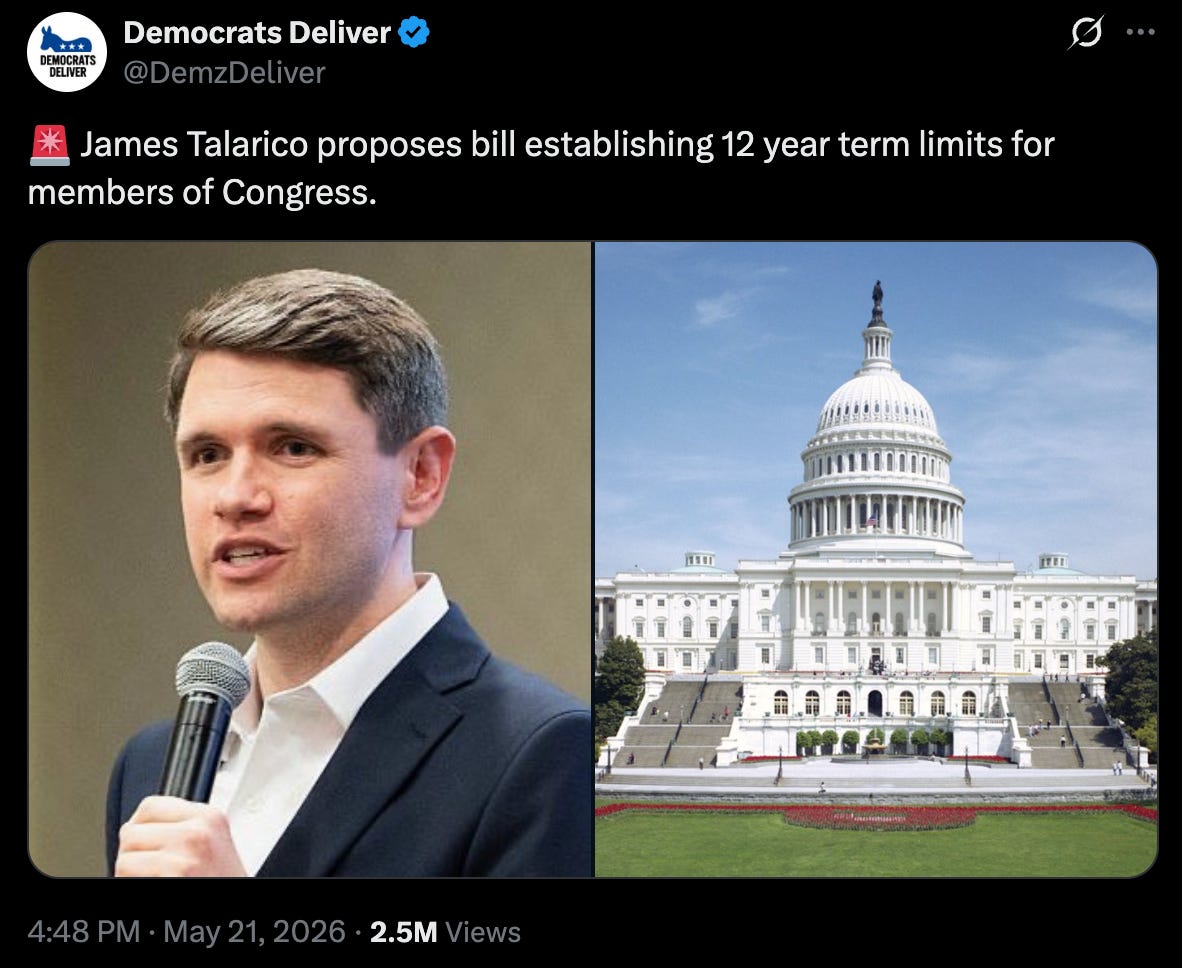
In reality, Talarico has been pushing this idea since January, when he also proposed limited terms for Supreme Court justices and 12-year terms for members of Congress. The Talarico campaign calls it part of his anti-corruption platform.
But this re-upping of Talarico’s much-watched campaign comes as a new video of Senator Susan Collins re-election campaign announcement has gone viral. The 73-year-old Republican from Maine, showing visible tremors and a shaking voice in the video announcing she’d be running for her 6th term, or her 36th year in the Senate.
Both have reinvigorated the idea that it’s time to install term-limits for those who serve in Congress.
The idea of term-limits isn’t new. The Founders of the country and authors of the Constitution argued about them. Today, nearly 90% of Americans say they want term limits, making them among the most popular policies in the country.
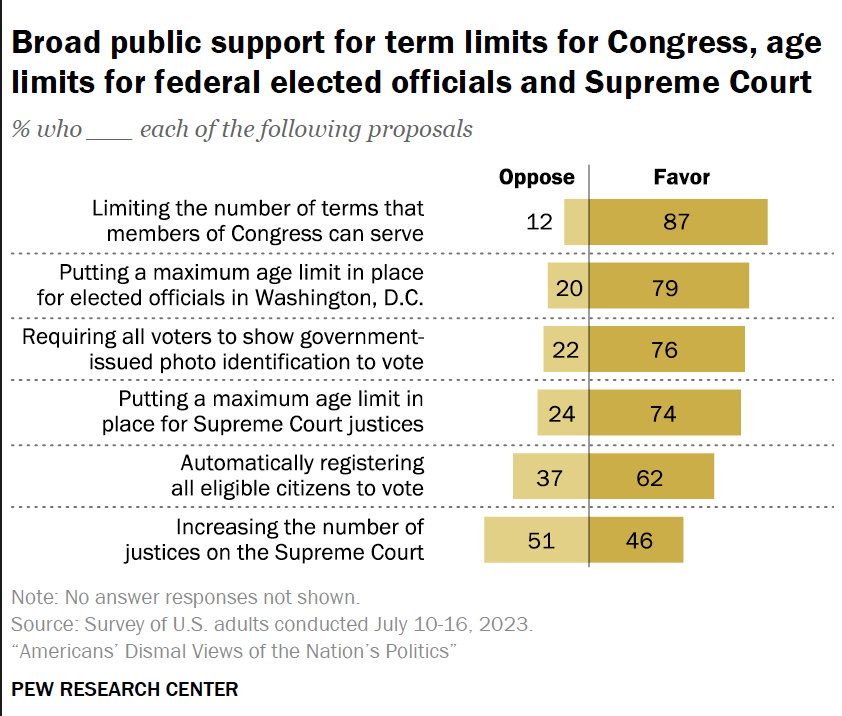
If that’s the case, why don’t we have limits on how long our leaders serve? It turns out the closer you look, the worse they get, and the Founders knew that right away.
